
Beginner’s Guide to Artificial Intelligence: Start From Zero
Artificial Intelligence (AI) is no longer a futuristic idea—it has already become a part of our daily lives. For example, from unlocking your smartphone using face recognition to receiving personalized recommendations on platforms like YouTube or Netflix, AI is everywhere.
However, if you are a complete beginner, learning AI might seem complicated at first.
What Is Artificial Intelligence?
Artificial Intelligence refers to machines or software that can perform tasks that normally require human intelligence. In other words, AI allows computers to learn, think, and make decisions using data.
Quick Definition (Featured Snippet Optimized)
AI is a technology that enables machines to learn from data, identify patterns, and make decisions without being explicitly programmed.
Real-Life Examples of AI
- Face unlock in smartphones
- Voice assistants
- Chatbots
- Recommendation systems
Therefore, AI is already influencing your everyday life.
Why Artificial Intelligence Is Important in 2026
Nowadays, AI plays a crucial role in improving efficiency and productivity. Moreover, businesses rely heavily on AI to make smarter decisions.
Industries Using AI
- Healthcare
- Finance
- Education
- E-commerce
As a result, AI is becoming one of the most important skills to learn today.
How Artificial Intelligence Works (Step-by-Step Guide)
To understand AI better, let’s break it down into simple steps:
AI Workflow
- Data collection
- Data processing
- Learning patterns
- Decision making
Simple Explanation
AI systems analyze large amounts of data and learn patterns. Then, they use those patterns to make predictions or decisions.
In short, AI improves automatically with more data.
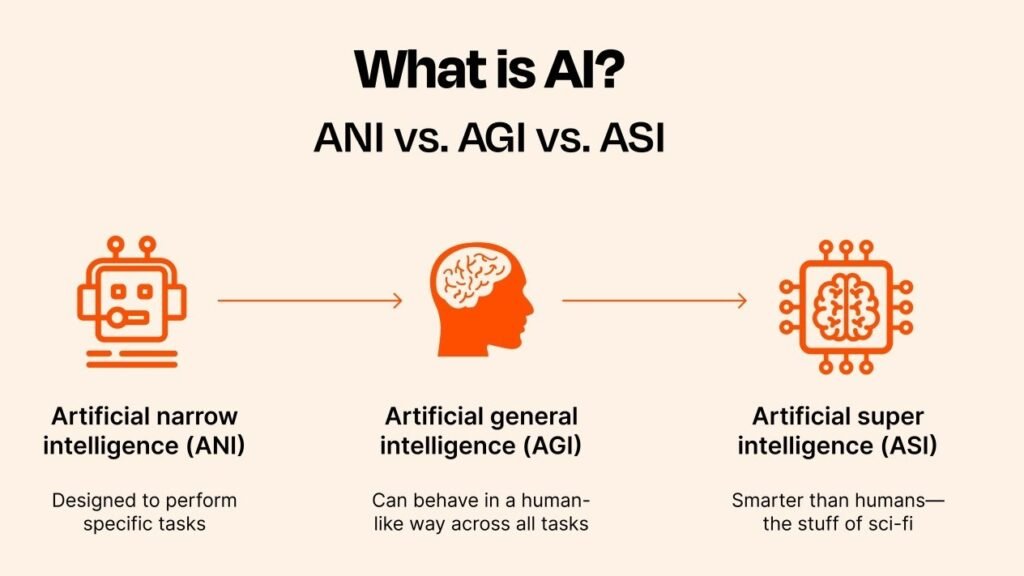
Types of Artificial Intelligence
Understanding the types of AI will help you build a strong foundation.
1. Narrow AI (Weak AI)
- Designed for specific tasks
- Most common today
2. General AI
- Human-level intelligence
- Still under development
3. Superintelligent AI
- More advanced than humans
- Theoretical concept
Currently, most AI systems are Narrow AI.
Key Concepts Every Beginner Should Learn
Before diving deeper, you should understand these concepts:
Machine Learning (ML)
Allows machines to learn from data.
Neural Networks
Inspired by the human brain.
Natural Language Processing (NLP)
Helps machines understand human language.
Computer Vision
Allows machines to analyze images and videos.
These concepts form the foundation of AI.
Benefits of Artificial Intelligence
AI offers several advantages:
Key Benefits
- Saves time through automation
- Improves accuracy
- Enhances decision-making
- Works 24/7
Therefore, AI is highly valuable across industries.
Challenges of Artificial Intelligence
Despite its benefits, AI also has some drawbacks.
Major Challenges
- Job displacement
- Privacy concerns
- Bias in algorithms
However, responsible use can reduce these risks.
How to Learn Artificial Intelligence from Scratch
If you’re a beginner, follow this roadmap:
Step 1 – Learn Basics
Start by understanding AI concepts.
Step 2 – Learn Python
Focus on:
- Variables
- Loops
- Functions
Step 3 – Learn Machine Learning
Understand:
- Data
- Models
- Predictions
Step 4 – Build Projects
Start small:
- Chatbots
- Recommendation systems
Step 5 – Use AI Tools
Explore AI platforms and tools.
Most importantly, practice consistently.
Our Services
We provide beginner-friendly services to help you start and grow your journey in Artificial Intelligence and digital skills.
Beginner-Friendly AI Projects
To gain practical experience, try these:
Project Ideas
- Chatbot
- To-do assistant
- Movie recommender
- Automation bot
These projects will help you understand real-world AI.
Future of Artificial Intelligence
Looking ahead, AI will continue to grow rapidly.
Future Trends
- AI in healthcare
- Smart cities
- Automation in businesses
Frequently Asked Questions (FAQs)
What is Artificial Intelligence in simple words?
Artificial Intelligence (AI) is the ability of machines or computer programs to perform tasks that usually require human intelligence, such as learning, problem-solving, and decision-making. In simple terms, AI allows computers to think and improve their performance based on data.
Can a beginner learn Artificial Intelligence from scratch?
Yes, absolutely. A beginner can learn Artificial Intelligence from scratch by starting with basic concepts, learning a programming language like Python, and gradually understanding machine learning. With consistent practice and the right resources, anyone can build a strong foundation in AI.
What are the basic skills required to start learning AI?
To start learning AI, you need basic skills such as logical thinking, problem-solving ability, and a basic understanding of mathematics. Learning programming (especially Python) and understanding data concepts will also help you progress faster in Artificial Intelligence.